
Hon'ble Minister of State (IC) of the Ministry of S&T

Secretary, Department of Biotechnology
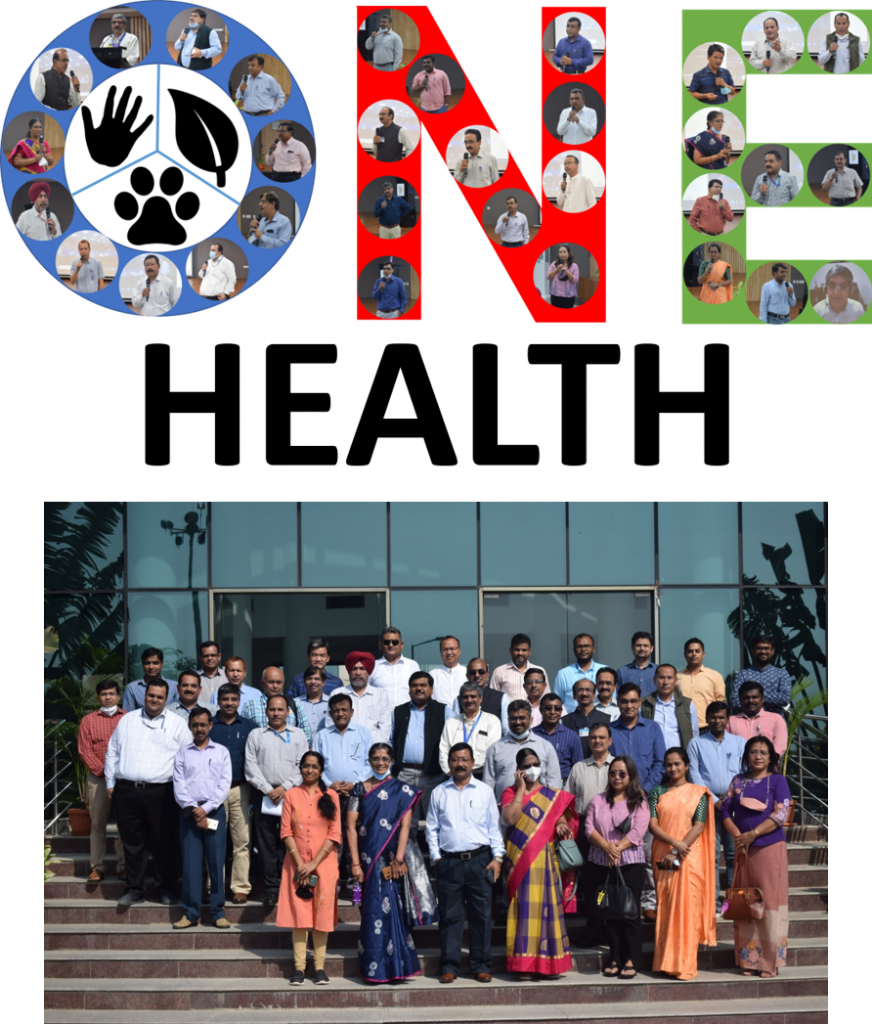
One Health and its initiative
The overall balance between biotic and abiotic constituents of the planet, and in particular the interconnected coexistence of various biotic species, hinges on the interdependent welfare of plants, animals and humans. Understanding, addressing and improving planetary health therefore needs a comprehensive approach through cooperative and collaborative work across several sectors and disciplines at local, national, regional and global levels. This requires a deep understanding and study of the shared ecosystems of plants, animals, people and the environment and is the key to sustainable development in all fronts.
It has been estimated that anywhere between 50 and 60 million human deaths occurred between 2002 and 2016, and that 25% of these deaths are caused by microbes. More than 1400 microbes, including 217 viruses/prions, 538 bacteria/rickettsia, 307 fungi, 66 protozoa and 287 helminths are pathogenic to humans, and about 97% of them have direct or indirect reservoirs in animals. Zoonoses constitute 61% of infectious diseases, 75% of emerging diseases, and >75% of newly discovered human pathogens. Among >300 zoonotic diseases are bacterial, rickettsial, viral, fungal, protozoan and parasitic diseases transmitted through direct or indirect contact, fomites, vectors and food and food products. These diseases not only affect human health and burden healthcare systems, but a large number of zoonotic and food-borne diseases also affect or are spread from food production species, affecting animal husbandry and agriculture-based economy, especially in the low and middle income countries. Whereas the major inherent cause of the emergence and spread of zoonotic diseases is microbial adaptation, this is overshadowed colossally by anthropogenic factors, including globalization, large-scale food production and trade, dramatic changes in environment and ecology, and simply, human behaviour. Studying disease incidence/prevalence, understanding animal reservoirs, modes of maintenance & transmission of pathogens, influence of anthropogenic factors, genotypes and serotypes of pathogens, and mechanisms of pathogenesis all form the basis of strategies to control and prevent zoonotic diseases.
Close to 2500 years ago, Hippocrates wrote on airs, waters and places, placing on record the impact of the environment on human health. One Health concept can be traced back to the 18th century when cattle plague (rinderpest) was decimating bovine population, and sick and suspect animals were culled to save healthy animals which were part of human food chain. This was soon followed by a similar strategy to control rinderpest in England, where carcasses of culled animals were buried and animal movement was restricted. The idea of animal-human interface was further emphasized through the pioneering work of various researchers since 19th century. It took stronger impetus through various organizations, and holistic, system-wide approaches were highlighted by early 2000s. The first doctrines were the Manhattan Principles which highlighted the links between humans, animals, and the environment, and how these links are integral to understanding disease dynamics, and the importance of interdisciplinary approaches to prevent diseases of public health concern, as well as education, investment, and policy development. The first strategic framework was formulated by several United Nations organizations in 2008, and expanded in 2010. Around this time and since then, other organizations and networks were also established, and conferences held, in various places. These and other initiatives led to the declaration of November 3 as One Health Day. Recently, in 2022, a quadripartite collaboration between FAO, UNEP, WHO, WOAH to address all aspects of One Health was set up to guide the four organizations in supporting the UN member states to build One Health capacities.
In India, One Health initiatives began recently. A national standing committee on zoonoses was established in the 1980s. The Department of Biotechnology (DBT) initiated efforts to bring together various researchers in 2018, and a One Health conference was organized the early part of 2019. A One Health roadmap was adopted in this conference, including multi-sectoral and transdisciplinary approach to achieve the targets. Further, DBT organized a joint meeting with various experts in the later part of 2019 on the initiation of One Health Platform to address livestock and human inter-dependencies. The Department has also initiated multi-centre network programs on livestock zoonotic diseases viz. bovine tuberculosis, anthrax, Japanese encephalitis etc. In November 2019, DBT constituted an expert group to identify the priority areas. The Expert Group recommended to formulate a One Health framework through collaboration, cooperation and human resource development. As a consequence of further deliberations, DBT launched the country’s first One Health Consortium consisting of 27 centres where veterinary, medical and wildlife infectious disease specialists have come together to systematically study the nation-wide prevalence of ten zoonotic and five transboundary animal diseases in order to lay the foundation for future research. It may be noted that other agencies have also initiated programs in different formats.